

Story by Archeadious kubai.
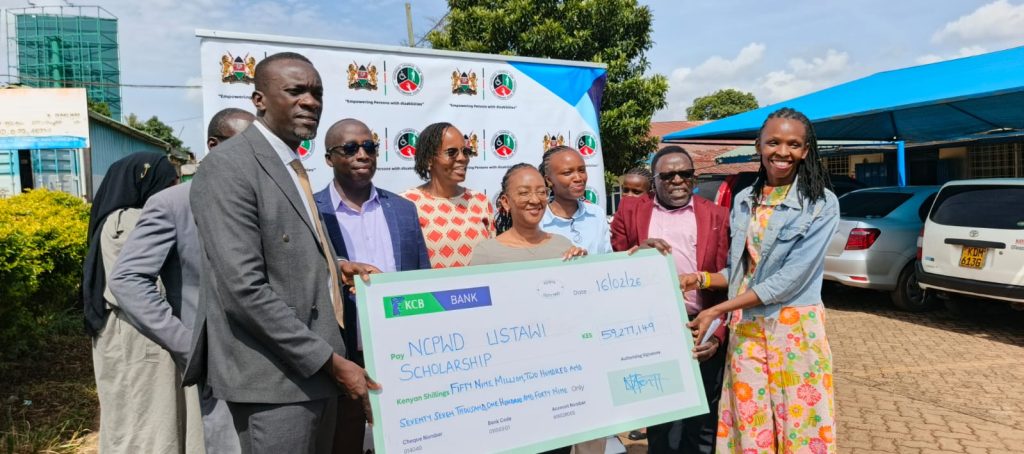
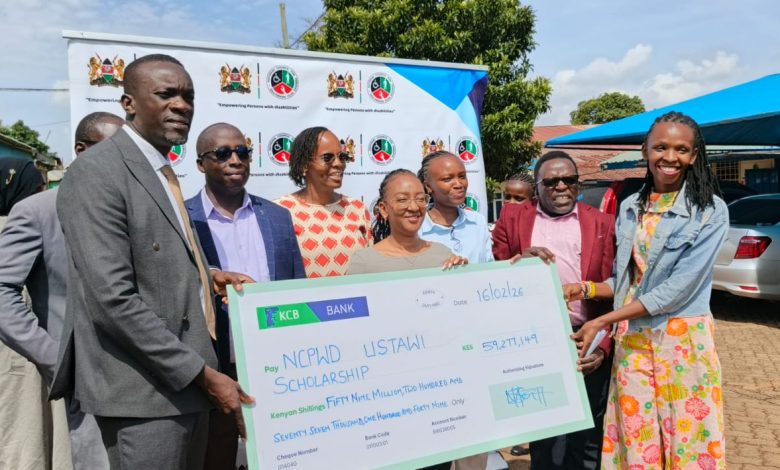
It was a morning filled with purpose and optimism as stakeholders gathered for a press briefing to mark the official disbursement of this year’s Ustawi Scholarship Program. The occasion was more than a routine announcement — it symbolized a continued commitment to ensuring that quality education is not treated as a privilege, but as a right for Persons with Disabilities.
The Ustawi Scholarship Program stands as a cornerstone of the Council’s broader vision to empower learners by increasing access to education, specialized training, and rehabilitation. Designed as a comprehensive initiative, the program integrates key education assistance schemes such as Faulu, which targets learners in primary special schools, secondary, and post-secondary institutions, and Wezesha, which supports bright but financially disadvantaged learners whose parents or guardians are persons with disabilities. Together, these interventions reflect a holistic approach aimed at addressing educational inequities.
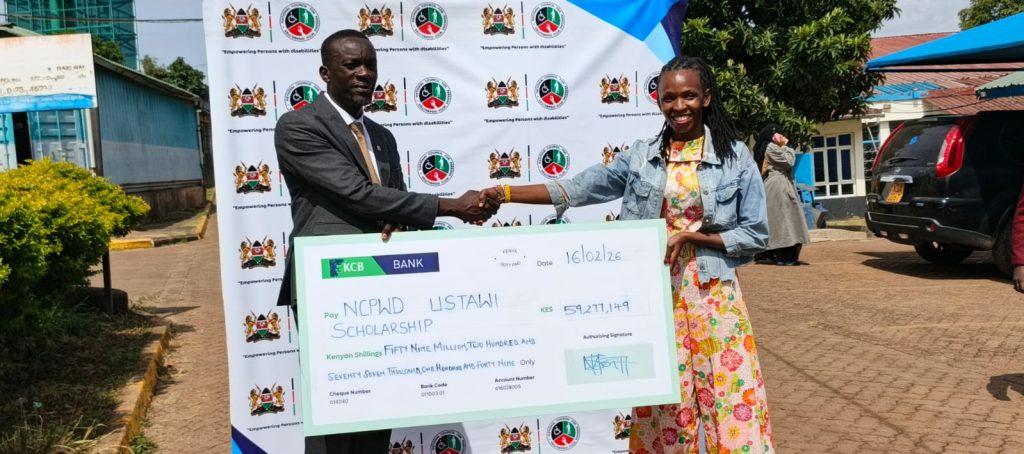
During the 2026 academic year, the program reached an impressive national scale. A total of KSh 59,277,149 was disbursed to benefit 2,201 learners with disabilities across 847 educational institutions spanning all 47 counties. This milestone demonstrates a firm belief in the transformative power of education — not only as a pathway to knowledge but as a foundation for independence, self-reliance, and equal participation in national development. To ensure timely support, cheques are being dispatched through County Officers for direct delivery to institutions across the country.
Despite these achievements, significant barriers remain. Many learners continue to face inaccessible learning environments, shortages of assistive devices, and financial pressures on families and guardians. Beyond tuition, hidden costs associated with disability — including long-term medication and the management of severe conditions — create additional challenges. In response, the Council has realigned its efforts through targeted interventions such as the Autism and Other Related Developmental Disabilities Program (ARDD), which funds therapy services, diagnostic assessments, and essential supplies.
The Council’s perspective is clear: education is far more than classroom instruction. It is a powerful tool for breaking cycles of poverty and marginalization, enabling persons with disabilities to enhance their social standing and fully participate in society. Recognizing this, a dedicated Education and Mentorship Unit has been established to provide specialized support and guidance throughout learners’ academic journeys.
These efforts are reinforced by the Persons with Disabilities Act, No. 4 of 2025, which provides a strong legal foundation for inclusive education, free and compulsory basic education, and individualized support systems. The Council intends to leverage this legislation in deeper engagement with the Ministry of Education to ensure these provisions are fully realized through adequate financing and collaboration.
None of these accomplishments would be possible without partnerships. Gratitude is extended to stakeholders who continue to support the mission, including the Kenya Pipeline Foundation, which supports 282 learners through its Inuka Scholarship Program, and the KCB Foundation, which supports 100 learners. Their contributions highlight the impact of collective responsibility in advancing inclusion.
As the Council continues its mandate to improve the lives of Persons with Disabilities, it remains steadfast in its commitment to ensuring every learner has the opportunity to maximize their potential and pursue education without barriers. The Ustawi Scholarship Program is not just financial support — it is a promise of dignity, opportunity, and a more inclusive future.