

By Peter Owino Rang’inya.
On February 11, 1990, Nelson Mandela walked out of prison for the first time in 27 years, flanked by his fellow Rivonia Trial comrades — Walter Sisulu, Govan Mbeki, Ahmed Kathrada, Andrew Mlangeni, Elias Motsoaledi, Raymond Mhlaba and Denis Goldberg. Many of these icons believed that after the ANC’s 1994 election victory, they would naturally step into the seats of government.
Mandela thought otherwise. He reminded them that the skills required to liberate South Africa were not the same skills needed to govern it. The new South Africa, he argued, had to be entrusted to a younger generation of comrades who had grown within the movement and acquired the administrative and economic expertise required for a modern state.
That is how Thabo Mbeki — the younger Mbeki who cut his teeth in the ANC Youth League and studied economics in England — became Mandela’s deputy rather than his father Govan. As deputy president, Mbeki became the custodian of the 1996 Growth, Employment and Redistribution (GEAR) policy, and in 1999 ascended to the presidency. In my view, he remains the most effective post-apartheid president to date.
Yet as Mbeki’s second term neared its end, a tide of nostalgia swept through the ANC. Veterans of the bush struggle clamoured to see one of their own at the helm. That sentiment delivered the Jacob Zuma presidency — a triumph of liberation history over technocratic readiness, with consequences South Africans continue to wrestle with.
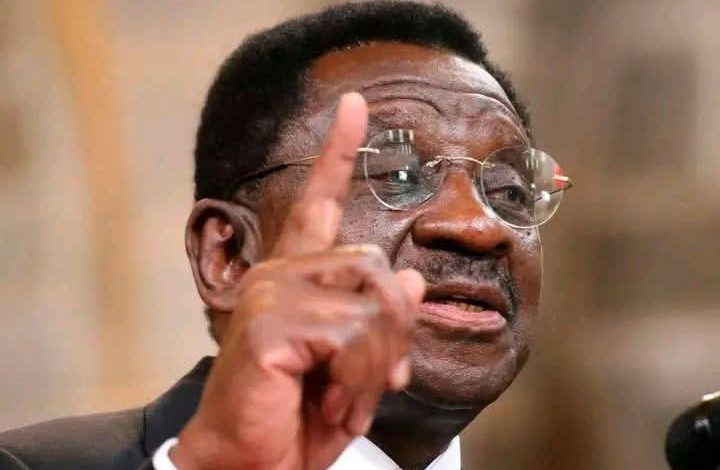
I have long argued that Governor James Orengo should never have taken the governorship of Siaya — and I made that case vigorously, even up to Baba himself. Orengo is a political scientist in the truest sense: a generator of ideas, a custodian of ideology, not the engineer of daily administration. Comrades like him are rare gems; you don’t discard them, you deploy them where they are most valuable.
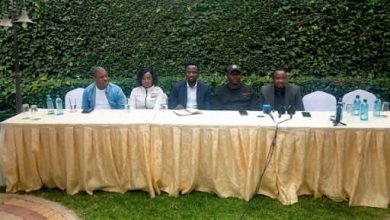
To his credit, Orengo appears to recognise this. And when he took the stage on Friday, speaking to ODM’s identity and ideological ancestry, he reminded the country exactly where he belongs. Few can articulate the soul of ODM better.
Which is why I am baffled when ODM opportunists declare that the party “will never return to the streets.” How unread can leaders be? ODM is a social democratic party. And across the world, from Europe to Latin America, protest is not an aberration of social democratic, socialist or labour movements — it is one of their foundational tools of political expression. Not a single one of the 132 such parties globally omits protest as a legitimate method of agitation and reform.
We have watched how “No Kings” protests in the United States have unsettled Donald Trump. Protests are a constitutional right — in Kenya and everywhere else — and they have delivered many of the freedoms citizens enjoy today. Yet instead of condemning those who unleash violence on peaceful demonstrators, some in ODM have turned their ire against protest itself.
This is political Stockholm syndrome — the kind of psychological jiu-jitsu at which modern authoritarian leaders excel. For insight into these tactics, ODM leaders need only read William J. Dobson’s The Dictator’s Learning Curve, which lays bare how 21st-century strongmen undermine institutions without overtly dismantling them.
One of Dobson’s examples is telling: when the EU funded human-rights programmes at St. Petersburg University, Vladimir Putin didn’t block the money or arrest anyone. Instead, he sent in building and environmental inspectors who declared the 19th-century campus uninhabitable until hundreds of “faults” were fixed. The university was effectively shut down for years. No violence. No arrests. Just bureaucratic suffocation.
All leaders — democratic or autocratic — fear mass protest. That is why every Kenyan president has been wary of Raila Odinga. His capacity to mobilize the streets has always been his most potent leverage. And let us be honest: President Ruto sought Baba’s hand not out of affection, but because the Gen Z protests shook the foundations of his administration.
So if ODM insists on negotiating with Ruto, it cannot voluntarily abandon its greatest bargaining chip. As Theodore Roosevelt advised in describing his own diplomatic doctrine: “Speak softly and carry a big stick.” Our big sticks are Orengo, Nyong’o, Sifuna, Osotsi, Winnie, Babu — and the millions of Jezi ya Baba faithful who know what ODM stands for.
“Oge matek.” ODM is, at its core, a social democratic movement. Protests are woven into its DNA. And the freedoms ODM has fought for give Mbadi, Wandayi and others the right to join parties that forbid protest and promise “broad-based government” until the end of time.
But history has taught us this: when leaders drift too close to power, they sometimes lose the clarity with which they once saw it.
.